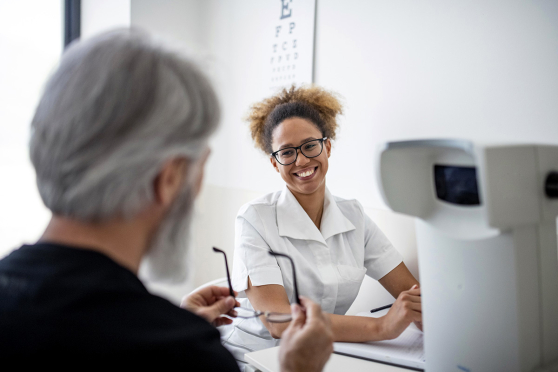
The hidden costs of skipping an eye exam
Seeing clearly is important for navigating daily life. Regular eye exams can help safeguard people’s vision at any age.
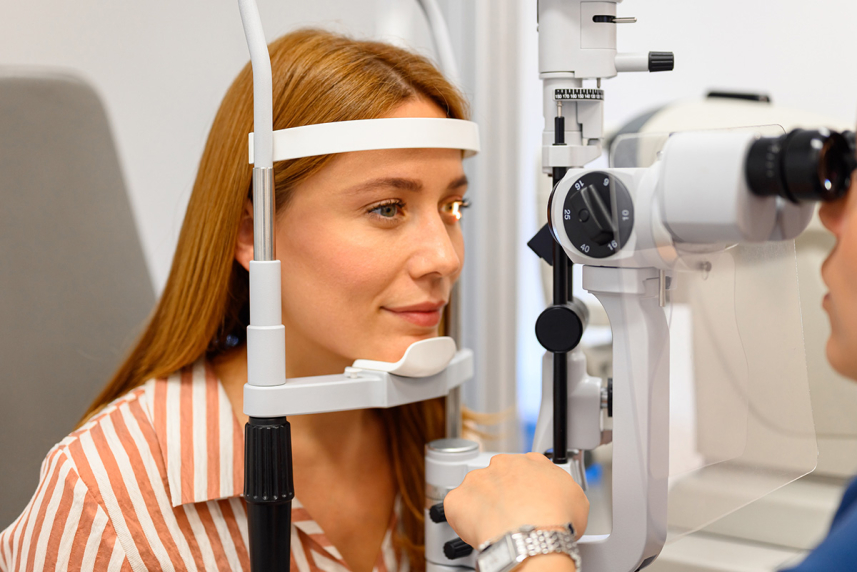
It may seem okay to put off an eye exam if eyesight seems fine—even for people who wear glasses or contacts. But skipping exams may not be a good idea.
Some vision issues aren’t noticeable at first. An exam can catch them early when they’re easier to treat. And good vision does more than just help people see clearly. It keeps people safe while driving. It helps prevent falls or accidents at home. It also helps people stay safe and productive at work.
What's more, comprehensive eye exams don’t just check vision. They can also find other health problems.
There can be a financial cost if vision problems are not treated, too. In fact, untreated vision problems cost billions of dollars.1 For example, medical costs for treating glaucoma in the U.S. is $2.2 billion per year. That works out to roughly $500 for every person with glaucoma.1 And vision problems contribute to $8 billion in lost productivity.1
Keep reading to learn more about the hidden costs of skipping eye exams. Then find out how regular exams can help protect vision and total well-being.
Due for an annual eye exam? Schedule it with a UnitedHealthcare Vision Network provider. Search now.
Untreated vision changes and workplace challenges
People need clear vision to do their jobs well. For example, if someone needs a stronger prescription for their glasses or contact lenses, they may have eye strain until it is updated. This is common for people who spend a lot of time on screens. Digital eye strain can cause blurry vision, headaches and tired eyes. It can make it harder to finish tasks on time and lowers productivity.2
Other eye conditions can also affect work. For example, presbyopia is a type of farsightedness that happens in middle age. It can make reading or typing harder. Cataracts—a clouding of the eye’s natural lens—can cause foggy or blurry vision. They make it hard to see in bright lights and at night.3 Keeping vision healthy through regular eye exams can help prevent eye strain and make everyday work tasks easier.
Vision changes and daily challenges
About 12 million Americans over age 40 have vision problems.4 Some eye diseases, like glaucoma and age-related macular degeneration, may not cause symptoms at first, so people may not notice them.5 Over time, they can slowly damage vision if not treated and impact everyday life in some surprising ways:
- Poor vision can lead to falls and accidents. People with poor vision are more likely to fall. They may not see well in dim light, which can make it hard to navigate stairs and corners. They may also miss tripping hazards, such as loose rugs or cords.5 Poor vision can also cause trouble with reading small labels or seeing switches on appliances. This can lead to accidents when taking medicine or doing tasks like cooking.5
- Poor vision can affect independence. People who have trouble seeing may avoid driving, especially at night or on busy roads. They may also avoid new places. This can lead to feeling isolated and staying home more often.6
- Poor vision can affect physical activity. It’s hard for people to get to the gym or walk outdoors when they can’t see well.5 That lack of exercise can be bad for overall health.
A great way to stay on top of eye health is by seeing a network eye care provider. Search for one in the UnitedHealthcare Vision Network today.

New frames. New you.
Browse the latest styles to find the perfect pair.
The importance of regular eye exams
Regular eye exams can help prevent problems linked with vision changes. During a comprehensive exam, an eye care provider checks how clearly a person can see and looks for any changes.7 For example, they can tell if someone needs a stronger prescription, or if they have developed presbyopia.
During an eye exam, eye care providers also dilate the eyes to look at the back of the eye. That can make it easier to check for serious eye and health conditions, including:4,8
- Cataracts
- Glaucoma
- Age-related macular degeneration
- Diabetic retinopathy
- Diabetes
- High blood pressure
Finding these problems early makes them easier to treat.7,8 That’s why eye exams are an important part of preventive care, just like yearly doctor visits.
Adults ages 18 to 64 should have an eye exam at least every two years, or more often if they have known vision problems. Adults over 65 should have an exam every year.9 Keeping to this schedule can help safeguard a person’s precious eyesight—and overall health.
Sources:
- Economic studies Centers for Disease Control and Prevention May 2024.
- The Benefits of Eye Care in Workplace Productivity and Efficiency USC Consulting Group, January 2025.
- Cataracts National Eye Institute, November 26, 2025.
- What doctors wish patients knew about improving eye health AMA, May 29, 2025.
- Vision Problems: Living With Poor Eyesight Hartford Health Care, October 1, 2025.
- Off the road: 1 in 4 seniors quit driving due to sight issues University of Michigan, April 21, 2025.
- Get a Dilated Eye Exam National Eye Institute, November 26, 2025.
- Why Eye Exams Are Important Centers for Disease Control and Prevention, May 2024.
- Comprehensive eye exams American Optometric Association.