
Quiz: Test winter vision knowledge
Know how eye care changes in the cold weather? Take this quiz to find out

Winter often brings colder weather and more time spent indoors. These changes can affect eye health in ways that may not be expected.
This quiz looks at surprising facts about winter eye health. Take the quiz to learn how to protect eye health during the winter season.
1. True or False: Sunglasses are needed in winter.
True. Sun protection matters year-round — and that includes the eyes. Ultraviolet rays (UV) remain strong in winter, even on cloudy days. In fact, snow can reflect up to 80 percent of UV rays, increasing exposure.1
This reflected light can strain eyes and raise the risk of long-term damage. Conditions linked to UV exposure include cataracts, eye sunburn and cancer.2
How to protect the eyes: Wearing sunglasses that provide at least 99 percent UVA and UVB protection helps reduce this risk.3 UnitedHealthcare Vision plans include coverage or discounts for prescription sunglasses or protective lenses, making winter eye protection easier to access.
Pair Eyewear is now in network with UnitedHealthcare Vision. Use benefits to get a magnetic Top Frame that turns glasses into sunglasses.
2. Does cold air affect eye health?
A. No. Cold air has little effect on the eyes.
B. Yes. Cold air and wind can dry out eyes, and indoor heating can worsen dryness.
C. Only indoor air affects eye health, not cold outdoor air.
D. Cold air improves eye comfort during winter.
Correct answer: B. Cold air and wind can dry out the surface of the eyes. During winter, indoor heating also lowers humidity, which can increase dryness. These conditions may cause burning, stinging or blurry vision, especially for people with dry eyes or those who wear contact lenses.
How to protect the eyes:
- Use lubricating eye drops to help replace tear film and relieve dry eyes.
- Run a humidifier to increase moisture in the air at home.
- Wear sunglasses outdoors to protect eyes from cold air and wind.
- Drink water to stay hydrated.
For severe dry eye issues, an eye care provider can help. One option may be punctal plugs placed in the tear ducts.3 These dissolving or semi-permanent plugs can prevent tears from draining out of the eye, helping to keep the eye surface moist.
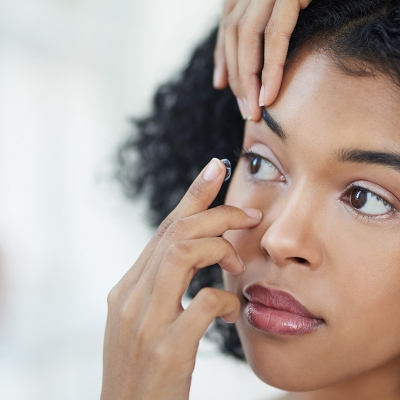
The easiest way to stock up on contacts
Find dailies, monthlies, extended wear and more, from all the top brands.
3. True or False: Screen time risks change in the winter.
True. Screen habits often increase in winter. Shorter days and colder temperatures can mean more time spent indoors on phones, tablets and computers. Extended screen use can lead to digital eye strain. This may include headaches, tired eyes and blurred vision.4
People also often blink less when looking at a digital device, making dry eye issues worse.
How to protect the eyes:
- Take regular screen time breaks. As a guideline, consider the 20-20-20 rule: At least every 20 minutes, take a 20-second break and look at something 20 feet away.4
- Increase the font size on devices and adjust the brightness to ease eye strain.
- Remember to blink. It may seem obvious, but blinking helps lubricate the eyes.
- Try to look down at a device and keep it at about an arm’s length away to decrease eye strain.5
- Wear glasses instead of contact lenses when using a device for an extended period. Contacts may make dry eye symptoms worse.
4. Are eye infections more common in the winter?
A. No. Eye infections are less common during winter.
B. Eye infections only happen during summer months.
C. Yes. Colds and flu spread more easily in winter, and the viruses that cause them can also lead to eye infections.
D. Winter weather protects the eyes from infection.
Correct answer: C. Colds and flu spread more easily in winter, and the viruses that cause these illnesses can also lead to pink eye or other eye infections. Winter dryness can also irritate the eyes, making them more likely to become infected.
How to protect the eyes:
- Wash hands frequently.
- Avoid touching the eyes frequently.
- Don’t share towels at home.
- Replace eye makeup to avoid bacterial growth.
Quick care matters when signs of infection appear, such redness, discharge or pain.6 UnitedHealthcare Vision coverage often includes access to eye care providers who can help diagnose and treat eye infections.
Need care for dry eyes or an eye infection? A UnitedHealthcare Vision Network provider can help. Search now.
5. Yes or No: Is it ever a good idea to delay a routine eye exam because of the season?
No. Eye exams are important year-round. Even in winter, they can catch changes related to dryness, screen use or underlying health conditions like diabetes or high blood pressure.
Eye care providers may also recommend protective eyewear, updated prescriptions or treatments to improve comfort during cold months.
How to protect the eyes: Stick to the eye care exam schedule recommended by an eye care provider. While it can vary by age and health history, adults ages 18 to 64 who are at low risk for eye disease should get an eye exam every one to two years.
People who need an eye exam at least once per year include:7
- People at higher risk for glaucoma, including adults over 65 or those with a family history
- Adults with diabetes
- People who wear contact lenses
- Children age 5 and over
Final score: how did it go?
If the answers came as a surprise, winter eye care may deserve more attention. Regular care can make a big difference when it comes to comfort and long-term eye health.
Sources:
- Even snow days are sun days Skin Cancer Foundation, March 11, 2025
- Ultraviolet (UV) protection American Optometric Association, Accessed February 6, 2026
- Punctal plugs Mayo Clinic, Accessed February 6, 2026
- ‘Tis the Season to be Stuck Inside American Optometric Association, December 3, 2024
- Eye strain All About Vision, October 15, 2025
- Eye infections MedlinePlus, June 22, 2025
- Comprehensive Eye Exams American Optometric Association