Top eye protection for child athletes (and how to get them to wear it)
Keep kids’ eyes safe this year with the right protective eyewear for every game, from football to basketball.
Back-to-school season means new classes, new friends and of course, sports! As kids gear up for soccer, football, basketball and other team activities, it's the perfect time to focus on safety — especially when it comes to protecting their eyes.
Why eye safety is so important
Every year, providers treat almost 30,000 eye injuries caused by sports. Some of these injuries are small, but others can be serious and even cause permanent vision loss.
The good news? 90% of sports-related eye injuries can be prevented just by wearing the right protective eyewear.2 That’s why choosing proper gear is so important for young athletes.
What type of protective eyewear is best for each sport?
For many sports activities, polycarbonate lenses should be used with protectors that meet or exceed the requirements of the current sport-specific ASTM (American Society for Testing and Materials) International.3 This is a global standards development organization.
Polycarbonate lenses are the strongest lens material available. It is lighter and thinner than regular plastic, shatterproof and provides UV protection.
Most sports have their own ASTM standard, designed to help protect against specific risks in that sport. Before choosing sports eyewear, check the product and packaging for the correct ASTM label. For the most up-to-date safety standards, visit an eye care provider or the ASTM website.
Here is a guide to the most effective protective eyewear based on popular children’s sports:
Baseball or softball
These sports involve high-speed pitches and fast line drives.
Recommended protection:
- A faceguard or visor attached to a batting helmet
- Sports eye guards, such as sports goggles or shatter-resistant glasses
[linkwell_cta:cta_block]
Basketball
Basketball can lead to accidental eye pokes, flying elbows or contact with the ball.
Recommended protection:
- Sports eye guards made of polycarbonate materials
Soccer
Even though it’s a no-hands sport, soccer involves quick movements and potential face contact.
Recommended protection:
- Sports eye guards that fit securely and resist fogging
Field hockey
With balls and sticks flying low to the ground, eye protection is key.
Recommended protection:
- Sport-specific eye guards built for field hockey
Football
Helmets protect the head, but the eyes still need extra coverage.
Recommended protection:
- A polycarbonate visor shield attached to the helmet’s faceguard
Ice hockey
Ice hockey is fast-paced with a hard puck and physical contact.
Recommended protection:
- A wire cage or polycarbonate visor attached to the helmet
Lacrosse
In this activity, helmets are not always worn.
Recommended protection:
- Protective goggles designed specifically for lacrosse
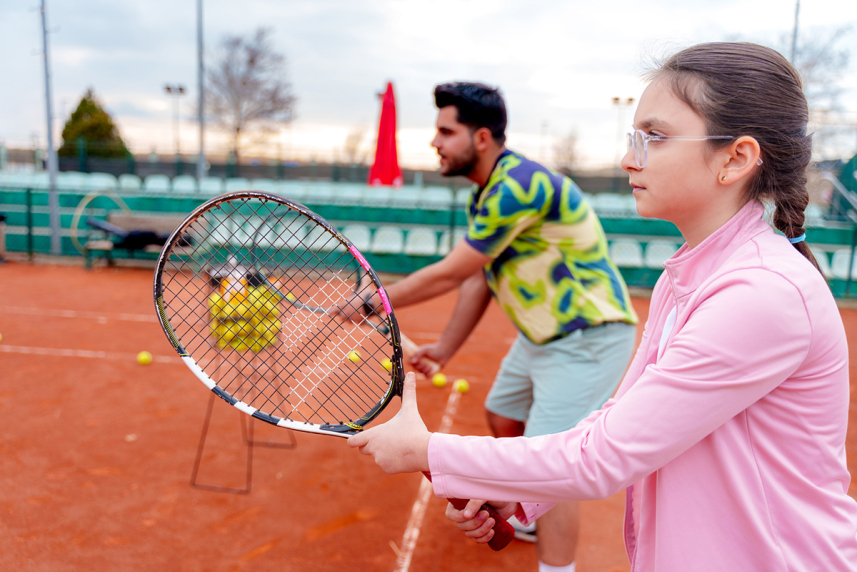
Racket sports (tennis, racquetball)
Small balls can travel quickly and hit players near the eyes. In many schools and children’s sports organizations, it is required that lenses meet the ASTM requirements when playing racket sports.
Recommended protection:
- Sports eye guards such as goggles or wraparound glasses
Ordering your child new glasses online is easy with our virtual mirror. Skip the store and have them try their pair on here.
New frames. New you.
Browse the latest styles to find the perfect pair.
How can kids feel more confident wearing protective eyewear?
Wearing protective gear isn't always easy for kids, especially those who don’t usually wear glasses. Here are some tips and tricks to make safety eyewear more exciting:
Let kids help choose their eyewear
When kids are part of the decision, they’re more likely to wear the gear. Picking out a favorite color, fit or shape can turn a boring task into a fun shopping trip.
Focus on the benefits
Clear vision means better game performance. Kids may pass better, score more goals or get more playing time when their eyes are protected.
Show real athletes wearing eye protection
Many professional athletes wear protective eyewear, from basketball players to tennis stars. Showing pictures or videos of these role models can help boost confidence and make goggles or shields feel “cool.”
Make comfort a priority
Uncomfortable gear often ends up unused. The best protective eyewear for kids is lightweight, anti-fog and built from shatterproof materials like polycarbonate. Adjustable straps and cushioned frames also make a big difference.
Playing sports helps kids stay active, build friendships and learn teamwork. But safety should always come first and that includes protecting eyesight.
By wearing the right protective eyewear, young athletes can avoid injuries and stay on the field, court or rink longer. Eye protection not only prevents harm — it helps kids play their best and enjoy the game with confidence.
Need new glasses for your child? In 3 easy steps, they could have a new pair on the way. Check your vision coverage, select their favorite frames, then check out. Done!
Sources:
- Sports eye safety. American Academy of Ophthalmology, March 11, 2025
- Help patients keep their eyes on the ball—and safe from injury. American Optometric Association, March 25, 2025
- About Protective Eyewear. Internal Sports Vision Association.