
Why people avoid eye exams — and what may help change that
Understanding the common reasons for skipping vision checks can help individuals take charge of their eye health.

The American Optometric Association (AOA) recommends that most people younger than age 65 get an eye exam at least every 2 years (more often if they’re high risk.)1 Older adults should consider seeing an eye care provider every year, suggests the AOA. But about only half of adults follow these guidelines, according to the most recent federal statistics.2
Comprehensive eye exams do more than check to see if someone needs a new pair of glasses. They are a crucial part of staying healthy. Eye care providers can spot early signs of many serious health conditions like diabetes and high blood pressure just by looking into the back of the eye.3 They can also spot the first signs of diseases that cause vision loss.3
So why do millions of adults put off their eye exams? Understanding why people avoid these health visits is the first step toward changing that habit.
Read on for some of the most common reasons people give for avoiding eye exams. And then learn strategies for overcoming them.
Problem: Not noticing vision problems
Many individuals believe that seeing clearly means their eyes are perfectly healthy. Or they may downplay subtle signs. For example, they may decide that their tired eyes are from too much screen time instead of a vision problem like near- or farsightedness.4
An eye care provider can spot vision issues long before any symptoms occur. This is especially important for serious eye diseases that develop more slowly, like glaucoma.5
Solution: Understand why regular exams are important
If people don’t know why eye exams matter, they may not make them a priority. For example, older adults may think blurry vision is just a normal part of aging. People with diabetes may not realize eye problems can develop slowly, without early symptoms.
Learning that regular eye exams support overall health can help make them part of a routine. Eye care providers can often find problems early, when they are easier to treat.
Problem: High costs
Cost is one of the main reasons people skip eye exams, according to studies.6 Even small out-of-pocket expenses, like copays or the cost of glasses or contact lenses, can make eye care feel unaffordable. For some, these costs add up with other medical bills, making it easy to delay or skip an appointment.
Solution: Use UnitedHealthcare Vision benefits and discounts
Many UnitedHealthcare Vision plans cover routine eye exams and offer an allowance for glasses or contact lenses.
Even after using standard benefits, additional savings may be available. Some plans offer discounts on extra pairs of glasses, contact lenses or lens upgrades like anti-reflective coating.
Choosing an in-network eye care provider is one of the easiest ways to save. These providers may offer lower, pre-negotiated prices, which can help reduce out-of-pocket costs.
Stay on top of eye health with an in-network provider. Search for an eye care provider now.
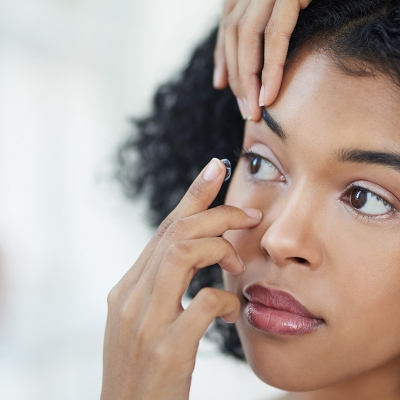
The easiest way to stock up on contacts
Find dailies, monthlies, extended wear and more, from all the top brands.
Problem: Scheduling issues
Eye exams typically take 30 minutes or more. Eye care providers run several types of tests to check vision, including testing eye pressure (a check for glaucoma), testing someone’s field of vision and their visual acuity.7
People may feel too busy to travel to their eye care provider’s office and then go through these series of tests. And if they’re getting their eyes dilated, they should wait until their eyes focus normally before driving, which can impact a person’s work day.7
Solution: Schedule multiple appointments
People can try to schedule an eye exam on the same day as a dental cleaning or annual physical. Taking one morning off work for two appointments saves time and travel. It can also be easier for people who need a ride, since it cuts down on trips. And asking for paid time off for one morning is often simpler than for multiple appointments.
To reduce waiting times for appointments, people can try to make the first appointment of the morning or the first one after lunch.
Due for an annual eye exam? Schedule it with a UnitedHealthcare Vision Network provider. Search now.
Problem: Health care anxiety
Sometimes people skip their eye exams because they don’t know what to expect. Or if it’s been a while, and they have noticed changes, they may fear that they’ll get bad news. Or the equipment seems unfamiliar and scary.
Certain tests and eye drops may feel uncomfortable for some people too. And the machines that test eye pressure get close to a person’s eye, which can feel strange.
Solution: Learn what to expect
For people who are anxious about eye exams, learning what happens at one can ease worries. There are articles on sites like the AOA that walk people through a comprehensive eye exam. Reading about the exam can take some of the mystery out of it.
Taking care of their eyes is crucial for everyone. Yes, it’s easy to find reasons to put off an eye exam. But learning how to overcome these barriers can make a big difference to overall health.
Sources:
- Comprehensive eye exams American Optometric Association, accessed April 1, 2026
- Increase the proportion of adults who have had a comprehensive eye exam in the last 2 years — V‑02 U.S. Department of Health and Human Services, accessed April 1, 2026
- How Often Do You Really Need an Eye Exam Cleveland Clinic, January 28, 2025.
- Refractive Errors National Eye Institute, December 19, 2025.
- Glaucoma National Eye Institute, November 26, 2025.
- “Barriers to Eye Care in the United States and Solutions for It: A Literature Review” Cureus, April 16, 2024.
- Eye Exam Cleveland Clinic, Last updated August 5, 2024.